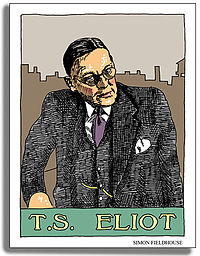
Tal dia com avui, Dimecres de Cendra, té també el seu correlat poètic més enllà de la sàtira del testament dels Carnestoltes. És per això que m’agrada rellegir el poema de T. S. Eliot. L’he copiat íntegrament en versió anglesa i copio l’enllaç del poema recitat pel mateix Eliot.
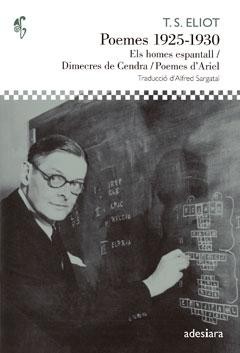
Escrit entre 1927 i 1929 i publicat el 1930 per Faber & Faber, la primera edició de Ash Wednesday va tenir un tiratge de sis-cents exemplars signats a mà per l’autor. Edward Muir considerava que era la millor obra del seu autor. Segons Roz Kaveney, Eliot, a l’estil del Dant, assoleix les millors imatges en l’evocació de l’infern que no pas del cel, i a la darrera part del poema crea un paisatge medieval idealitzat a manera d’un llibre d’hores que convida més a la contemplació que a la pregària. Les referències literàries del poema són, a més del Dant, a Shakespeare i a la Bíblia. Per a C. E. Chaffin, l’obra no és tant una fugida del món del poeta sinó, pel contrari, la seva incardinació, molt més palesa als Four Quartets.
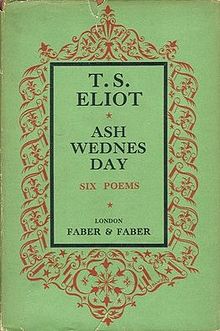
En català ha estat traduït per Alfred Sargatal i recentment editat per Adesiara (2014). La primera edició la va fer per a la col·lecció de L’Escorpí, d’Edicions 62 (1977).
DIMECRES DE CENDRA
I
Com que no espero tornar mai més
Com que no espero
Com que no espero tornar
A desitjar els dons d’aquest i les oportunitats d’aquell altre
Ja no m’empenyo en l’afany de tals coses
(Per què la vella àliga hauria d’estendre les ales?)
Per què lamentar
El poder esvanit del reialme habitual?
Com que no espero conèixer mai
La insegura glòria de l’hora positiva
Com que crec que no
Com que sé que no he de conèixer
L’únic veritable poder transitori
Com que no puc beure
Allà on floreixen els arbres i brollen les deus, car res no torna a ser
Com que sé que el temps és sempre el temps
I el lloc és sempre i només el lloc
I el que és real ho és només per un moment
I només en un sol lloc
M’alegro que les coses siguin com són i
Renuncio a la santa faç
I renuncio a la veu
Com que no espero tornar mai més
Per això m’alegro, perquè haig d’inventar quelcom
En què delectar-me
I prego a Déu que tingui pietat de nosaltres
I prego que pugui jo oblidar
Això que amb mi mateix discuteixo massa
I explico en excés
Com que no espero tornar mai més
Que aquestes paraules responguin
D’allò que és un fet, perquè no es repeteixi
Tant de bo el judici no sigui massa sever amb nosaltres
Com que aquestes ales ja incapaces de volar
No són sinó aspes per a batre l’aire
L’aire que ara és tan tènue i sec
Més tènue i sec que no pas la voluntat
Ensenyeu-nos a fer cas i a no fer cas
Ensenyeu-nos a estar tranquils.
Pregueu per nosaltres pecadors ara i a l’hora de la nostra mort
Pregueu per nosaltres ara i a l’hora de la nostra mort.
ash wednesday
Because I do not hope to turn again
Because I do not hope
Because I do not hope to turn
Desiring this man’s gift and that man’s scope
I no longer strive to strive towards such things
(Why should the aged eagle stretch its wings?)
Why should I mourn
The vanished power of the usual reign?
Because I do not hope to know again
The infirm glory of the positive hour
Because I do not think
Because I know I shall not know
The one veritable transitory power
Because I cannot drink
There, where trees flower, and springs flow, for there is nothing again
Because I know that time is always time
And place is always and only place
And what is actual is actual only for one time
And only for one place
I rejoice that things are as they are and
I renounce the blessed face
And renounce the voice
Because I cannot hope to turn again
Consequently I rejoice, having to construct something
Upon which to rejoice
And pray to God to have mercy upon us
And pray that I may forget
These matters that with myself I too much discuss
Too much explain
Because I do not hope to turn again
Let these words answer
For what is done, not to be done again
May the judgement not be too heavy upon us
Because these wings are no longer wings to fly
But merely vans to beat the air
The air which is now thoroughly small and dry
Smaller and dryer than the will
Teach us to care and not to care
Teach us to sit still.
Pray for us sinners now and at the hour of our death
Pray for us now and at the hour of our death.
II
Lady, three white leopards sat under a juniper-tree
In the cool of the day, having fed to satiety
On my legs my heart my liver and that which had been contained
In the hollow round of my skull. And God said
Shall these bones live? shall these
Bones live? And that which had been contained
In the bones (which were already dry) said chirping:
Because of the goodness of this Lady
And because of her loveliness, and because
She honours the Virgin in meditation,
We shine with brightness. And I who am here dissembled
Proffer my deeds to oblivion, and my love
To the posterity of the desert and the fruit of the gourd.
It is this which recovers
My guts the strings of my eyes and the indigestible portions
Which the leopards reject. The Lady is withdrawn
In a white gown, to contemplation, in a white gown.
Let the whiteness of bones atone to forgetfulness.
There is no life in them. As I am forgotten
And would be forgotten, so I would forget
Thus devoted, concentrated in purpose. And God said
Prophesy to the wind, to the wind only for only
The wind will listen. And the bones sang chirping
With the burden of the grasshopper, saying
Lady of silences
Calm and distressed
Torn and most whole
Rose of memory
Rose of forgetfulness
Exhausted and life-giving
Worried reposeful
The single Rose
Is now the Garden
Where all loves end
Terminate torment
Of love unsatisfied
The greater torment
Of love satisfied
End of the endless
Journey to no end
Conclusion of all that
Is inconclusible
Speech without word and
Word of no speech
Grace to the Mother
For the Garden
Where all love ends.
Under a juniper-tree the bones sang, scattered and shining
We are glad to be scattered, we did little good to each other,
Under a tree in the cool of the day, with the blessing of sand,
Forgetting themselves and each other, united
In the quiet of the desert. This is the land which ye
Shall divide by lot. And neither division nor unity
Matters. This is the land. We have our inheritance.
III
At the first turning of the second stair
I turned and saw below
The same shape twisted on the banister
Under the vapour in the fetid air
Struggling with the devil of the stairs who wears
The deceitul face of hope and of despair.
At the second turning of the second stair
I left them twisting, turning below;
There were no more faces and the stair was dark,
Damp, jagged, like an old man’s mouth drivelling, beyond repair,
Or the toothed gullet of an aged shark.
At the first turning of the third stair
Was a slotted window bellied like the figs’s fruit
And beyond the hawthorn blossom and a pasture scene
The broadbacked figure drest in blue and green
Enchanted the maytime with an antique flute.
Blown hair is sweet, brown hair over the mouth blown,
Lilac and brown hair;
Distraction, music of the flute, stops and steps of the mind over the third stair,
Fading, fading; strength beyond hope and despair
Climbing the third stair.
Lord, I am not worthy
Lord, I am not worthy
but speak the word only.
IV
Who walked between the violet and the violet
Who walked between
The various ranks of varied green
Going in white and blue, in Mary’s colour,
Talking of trivial things
In ignorance and knowledge of eternal dolour
Who moved among the others as they walked,
Who then made strong the fountains and made fresh the springs
Made cool the dry rock and made firm the sand
In blue of larkspur, blue of Mary’s colour,
Sovegna vos
Here are the years that walk between, bearing
Away the fiddles and the flutes, restoring
One who moves in the time between sleep and waking, wearing
White light folded, sheathing about her, folded.
The new years walk, restoring
Through a bright cloud of tears, the years, restoring
With a new verse the ancient rhyme. Redeem
The time. Redeem
The unread vision in the higher dream
While jewelled unicorns draw by the gilded hearse.
The silent sister veiled in white and blue
Between the yews, behind the garden god,
Whose flute is breathless, bent her head and signed but spoke no word
But the fountain sprang up and the bird sang down
Redeem the time, redeem the dream
The token of the word unheard, unspoken
Till the wind shake a thousand whispers from the yew
And after this our exile
V
If the lost word is lost, if the spent word is spent
If the unheard, unspoken
Word is unspoken, unheard;
Still is the unspoken word, the Word unheard,
The Word without a word, the Word within
The world and for the world;
And the light shone in darkness and
Against the Word the unstilled world still whirled
About the centre of the silent Word.
O my people, what have I done unto thee.
Where shall the word be found, where will the word
Resound? Not here, there is not enough silence
Not on the sea or on the islands, not
On the mainland, in the desert or the rain land,
For those who walk in darkness
Both in the day time and in the night time
The right time and the right place are not here
No place of grace for those who avoid the face
No time to rejoice for those who walk among noise and deny the voice
Will the veiled sister pray for
Those who walk in darkness, who chose thee and oppose thee,
Those who are torn on the horn between season and season, time and time, between
Hour and hour, word and word, power and power, those who wait
In darkness? Will the veiled sister pray
For children at the gate
Who will not go away and cannot pray:
Pray for those who chose and oppose
O my people, what have I done unto thee.
Will the veiled sister between the slender
Yew trees pray for those who offend her
And are terrified and cannot surrender
And affirm before the world and deny between the rocks
In the last desert before the last blue rocks
The desert in the garden the garden in the desert
Of drouth, spitting from the mouth the withered apple-seed.
O my people.
VI
Although I do not hope to turn again
Although I do not hope
Although I do not hope to turn
Wavering between the profit and the loss
In this brief transit where the dreams cross
The dreamcrossed twilight between birth and dying
(Bless me father) though I do not wish to wish these things
From the wide window towards the granite shore
The white sails still fly seaward, seaward flying
Unbroken wings
And the lost heart stiffens and rejoices
In the lost lilac and the lost sea voices
And the weak spirit quickens to rebel
For the bent golden-rod and the lost sea smell
Quickens to recover
The cry of quail and the whirling plover
And the blind eye creates
The empty forms between the ivory gates
And smell renews the salt savour of the sandy earth This is the time of tension between dying and birth The place of solitude where three dreams cross Between blue rocks But when the voices shaken from the yew-tree drift away Let the other yew be shaken and reply.
Blessed sister, holy mother, spirit of the fountain, spirit of the garden,
Suffer us not to mock ourselves with falsehood
Teach us to care and not to care
Teach us to sit still
Even among these rocks,
Our peace in His will
And even among these rocks
Sister, mother
And spirit of the river, spirit of the sea,
Suffer me not to be separated
And let my cry come unto Thee.
M'agrada S'està carregant...


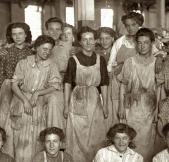 societat occidental per denominació, privilegiada per comparació i lliure per convicció que quan arriba el vuit de març es commemora el Dia Internacional de les Dones i la seva llarga història de reivindicacions en favor de la millora de les condicions, sociolaborals, i de l’obtenció del dret de vot i de la igualtat de drets. Aquestes reivindicacions, elementals per a qualsevol societat que es consideri democràtica, han transcorregut per tota mena d’opressions, incomprensions i limitacions. I, una vegada guanyades, l’ús que en pugui fer cadascuna queda condicionat pels usos i costums dels diferents països o sectors socials. L’exercici individual dels drets aconseguits col·lectivament és un capítol subsegüent.

 QUADERN DE TERRAMAR